
Home Staging Before Selling in Scotland: What to Do
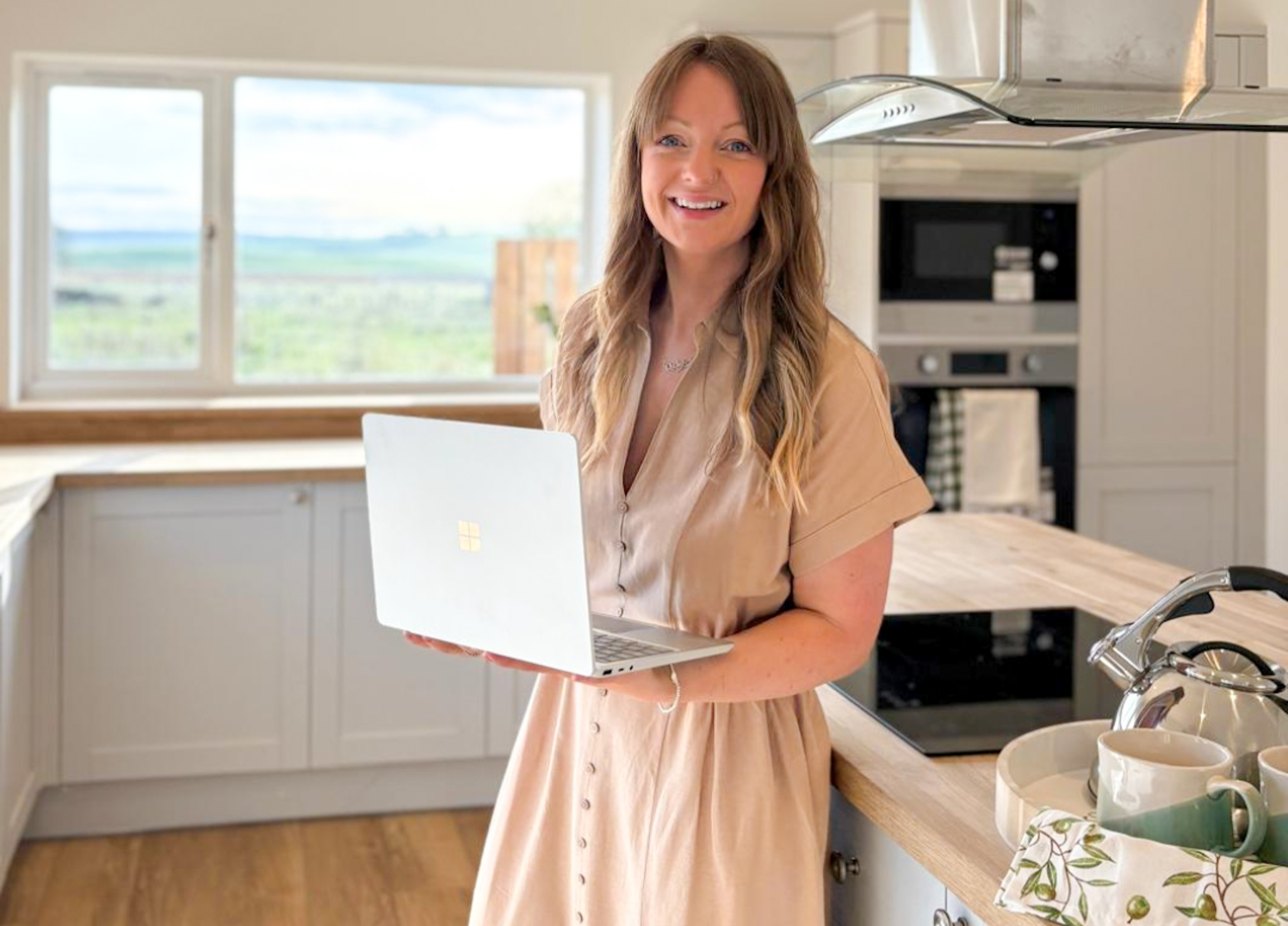

If you are considering home staging before selling in Scotland, one of the biggest questions is usually where to begin. Should you redecorate? Replace furniture? Clear everything out? Or simply tidy up and book the photographer?
The answer depends on the property.
Good home staging isn't about making every Scottish home look like the same immaculate show home. It is about identifying what could make a buyer hesitate, what deserves to be highlighted and what will help somebody understand the property within seconds of seeing it online.
And those first few seconds matter.
Why home staging before selling in Scotland matters in 2026
Scotland's housing market remains active, but buyers still have choices.
Registers of Scotland reported that the average Scottish property price reached £192,000 in April 2026, 2.8% higher than April 2025.
Rightmove's June 2026 figures subsequently showed Scottish asking prices rising 0.8% month on month and 3.3% annually, with homes taking an average of 31 days to secure a buyer.
That doesn't mean every home will sell in 31 days.

Property type, location, condition, asking price and presentation can all influence buyer interest.
In Edinburgh and the surrounding ESPC areas, the picture is particularly interesting. Between March and May 2026, properties took a median 25 days to sell, two days faster than the same period the previous year. Yet sales volumes were down 9.2%.
In other words, buyers are still buying. But they are not buying everything indiscriminately.
Presentation therefore becomes one of the elements a seller can actually control.
When should you start home staging before selling in Scotland?
Ideally, staging decisions should happen before the marketing photographs are taken, not once a property has been online for six weeks.
Think of the launch as opening night.
Your listing photographs, floorplan, description and asking price all arrive on the market together. If buyers scroll past the photographs, you cannot rely on them subsequently arranging a viewing and discovering how lovely the property is in person.
For most sellers, the sensible sequence is:
Decide when you intend to launch.
Speak to your estate agent or solicitor-estate agent about price and target buyer.
Assess repairs, decorating and maintenance.
Create the staging plan.
Declutter or remove unsuitable furniture where necessary.
Install furniture, accessories and styling.
Complete the professional photography.
Launch the property.
For vacant properties, staging can normally take place once decorating and maintenance work has finished.
For occupied homes, the process is different. Good staging works with the strongest pieces already in the home and identifies what needs moving, editing, repositioning or supplementing.
You don't necessarily need to empty your house.
Home staging before selling in Scotland starts with your buyer
This is the bit that gets missed.
The question isn't:
"What interior style do I like?"
It is:
"Who is most likely to buy this property and what do they need to understand about it?"
Imagine a two-bedroom Edinburgh flat.
The second bedroom might currently contain boxes, a clothes rail and an exercise bike. To its owner, its purpose is obvious. To somebody seeing one photograph online, it can look considerably smaller than it actually is.
Stage it as a proper bedroom and suddenly there is scale.
Or perhaps the most likely buyer works remotely. In another property, showing that same space as a beautifully considered home office may communicate greater value.
That's why staging shouldn't follow a rigid checklist.
It should follow the property.
Start with likely buyer needs
Consider:
property location
number of bedrooms
likely household type
price bracket
architectural style
room dimensions
outdoor space
competing properties currently listed nearby
A family house in East Lothian shouldn't necessarily be presented in the same way as a one-bedroom investment property in central Glasgow.
Context matters.
Which rooms should you focus on first?
Prioritise the rooms that explain the property.
Usually, that means the main living space, principal bedroom and kitchen/dining area.
After that, focus on rooms whose size or purpose isn't immediately obvious.
A narrow box room.
An awkward open-plan corner.
A large landing.
A basement room.
A dining area that disappears when empty.
Furniture gives the eye something extremely useful: scale.
An empty bedroom might look tiny. A bedroom containing a correctly proportioned double bed, bedside tables and lighting immediately communicates what fits.
That's much more informative.
Should you redecorate before staging?
Not automatically.
Perfectly acceptable decoration can become an expensive distraction if you convince yourself the whole property must be repainted before sale.
Instead, look for finishes that negatively affect the photographs or make the property feel poorly maintained.
That might include:
visibly damaged paintwork
strong marks or scuffs
unfinished DIY jobs
badly discoloured sealant
damaged flooring
unusually intense colours that dominate a room
obvious signs of neglect
A professionally staged room can't completely disguise poor maintenance, nor should it.
The objective is to remove unnecessary objections and let the property's stronger features take centre stage.
What about decluttering?
Decluttering and staging are related, but they aren't the same thing.
A completely bare room isn't necessarily better than a cluttered room.
Sometimes people declutter so aggressively that a home loses warmth and scale. Every worktop gets emptied. Every shelf becomes bare. Every personal detail disappears.
The result can feel surprisingly sterile.
Instead, edit.
Clear visual noise, overfilled furniture, excess possessions and distracting personal items, while retaining enough texture and character for the property to feel like somewhere somebody might genuinely want to live.
Short version?
Less stuff. Not necessarily no stuff.
Should you stage an empty property?
Vacant properties are one of the strongest use cases for full staging because completely empty rooms require buyers to do more imaginative work.
Without furniture, there's little immediate reference for scale.
Where does the sofa go?
Would a six-person dining table fit?
Could a king-size bed work in that room?
What is that strange area beside the stairs actually for?
Staging can answer those questions visually.
It is particularly valuable where the property has unusual proportions, open-plan spaces or rooms whose function isn't immediately obvious.
Use staging to improve the photographs, not just the viewing
A common misconception is that staging is primarily about what happens when somebody walks through the door.
In reality, its first job may happen much earlier.
On a phone screen. Buyers searching property portals can compare several homes within minutes. Professional staging helps create clear, balanced images that communicate room scale, function and lifestyle quickly.
That's why staging after disappointing photography has already been published is rarely the ideal sequence.
Get the presentation right first. Then photograph it.
What staging cannot fix
Home staging is powerful, but it isn't fairy dust.
It cannot compensate indefinitely for:
a significantly unrealistic asking price
serious defects
poor-quality photography
legal or title complications
inaccurate listing information
major maintenance issues
Nor should sellers expect it to.
Staging is part of the wider property marketing strategy.
Price, presentation, photography, positioning and promotion all need to work together.
A useful August 2026 reality check for Scottish sellers
Rightmove's wider June 2026 index reported unusually high levels of property stock across Great Britain, while noting that Scotland was outperforming many other regions on price growth and speed to find a buyer.
The takeaway isn't that sellers should panic.
Quite the opposite.
It means good Scottish properties can still attract buyers, but sellers should be intentional about how they come to market.
If buyers have alternatives, make yours easy to understand.
Make its best features obvious.
Make the photography work.
And give somebody a reason to stop scrolling.
Thinking about home staging before selling in Scotland?
Effective home staging before selling in Scotland isn't about disguising a property or filling every corner with fashionable furniture. It is about presenting the home clearly, helping buyers understand its scale and purpose and ensuring your marketing photographs show the property at its strongest.
At June Home Staging, we work with homeowners across Edinburgh, Glasgow, Dundee, Perth, Stirling, Falkirk, Aberdeen and locations throughout Scotland to prepare properties for market.
Planning to sell? Explore our Staging for Sale service or get in touch to discuss your property.


Comments