
Staging a Flat for Sale in Edinburgh
Making the Most of Every Square Foot
Flats are Edinburgh’s defining property type. From Victorian tenements in Marchmont to modern new builds in Granton, from colony flats in Stockbridge to Georgian apartments in the New Town, the majority of Edinburgh’s housing stock is made up of flats - and each type comes with its own character, its own challenges, and its own opportunities when it comes to selling.

The challenge for Edinburgh flat sellers is specific. Flats are often compact, with unique architectural features that are genuine assets - high ceilings, bay windows, Edinburgh presses, original cornicing - but only if buyers can see past the clutter and visualise the space working for them. Edinburgh is also a fiercely competitive market. Buyers browse hundreds of flat listings on ESPC and Rightmove before booking a single viewing. The properties that photograph well and feel spacious and inviting are the ones that attract multiple offers.
Whether you’re selling a one-bed in Gorgie or a three-bed in Bruntsfield, this guide to staging a flat for sale Edinburgh will help you present your home at its absolute best. We’ll cover every flat type - tenement, new build, colony, and main door - with practical, Edinburgh-specific staging tips you can act on immediately.
At June Home Staging, we’ve staged flats across every Edinburgh neighbourhood. We know the unique challenges - and the opportunities - that each flat type presents. Let’s walk through them.
Why Staging a Flat for Sale Edinburgh Is Different From Staging a House
Edinburgh flats require a different staging approach to houses, and understanding why is the first step to getting the presentation right.
Space is at a premium. Most Edinburgh flats sit between 40 and 80 square metres. Every piece of furniture and every accessory needs to earn its place. Over-furnishing makes rooms feel cramped and claustrophobic. Under-furnishing makes them feel cold and undefined. Getting the balance right requires a careful eye for scale and proportion.
Light management is critical. Many Edinburgh tenement flats have rooms arranged off a central hallway with limited natural light. Ground-floor and basement flats face particular challenges, especially during the darker months. Staging must maximise light through mirrors, light-coloured soft furnishings, and strategic lamp placement - because a dark flat feels smaller than it is, and a bright flat feels bigger.
Communal areas set expectations. Buyers walk through the communal stair before they reach your front door. If the stair is dark and dated, your hallway needs to work even harder to create a positive first impression. That transition - from shared stairwell to private home - is one of the most important moments in any Edinburgh flat viewing.
Photography matters more. Edinburgh flats compete against hundreds of similar listings online. The hero image in your ESPC or Rightmove listing - typically the living room - must be compelling enough to earn a click. Professional staging is often the difference between a scroll-past and a viewing request.
Proportional ROI. Staging costs are proportionally lower for flats - typically £1,000 to £2,500 for a one- or two-bedroom property - but the percentage impact on sale price is often higher because the competition is so intense. In a market where dozens of similar flats are listed at any given time, presentation becomes the differentiator.
Staging Edinburgh Tenement Flats
Tenement flats are the most common property type in Edinburgh, and they’re also among the most rewarding to stage. Beautiful bones - high ceilings, generous proportions, original features - combined with specific spatial challenges that good staging can address directly.
The Bay Window Living Room
The bay window is often the defining feature of an Edinburgh tenement flat, and it should be staged as a focal point. Consider it as a reading nook with an armchair and a floor lamp, or leave it uncluttered to frame the view and flood light into the room. Either approach draws the eye and makes the space feel generous.
Furniture placement matters enormously here. Float furniture away from the walls rather than pushing everything to the edges. In a typical tenement living room, a sofa facing away from the bay window with an armchair at an angle creates an inviting conversation area that photographs beautifully and makes the room feel purposeful rather than just big.
Don’t block the window with heavy curtains. Use light, airy drapes or shutters to maximise the sense of height and light. The bay window should be the star of the room, not hidden behind fabric.
The Central Hallway
Edinburgh tenements typically have a long central hallway with rooms branching off each side. This corridor can feel dark and narrow if left untreated. A runner rug adds warmth and guides the eye through the space. A mirror on the wall bounces whatever light is available. And bright, warm overhead or wall lighting transforms the feel instantly.
Edinburgh presses - the built-in hallway cupboards unique to Edinburgh tenements - deserve particular attention. Buyers will open them. A tidy, well-organised press demonstrates storage potential. A crammed, overflowing one suggests the flat doesn’t have enough space. Take the time to declutter and organise these before any viewing.
The Bedroom
Tenement bedrooms can be surprisingly generous (those high ceilings help) or genuinely compact (the box rooms). Either way, the same principles apply: clear the bed of everything except crisp white bedding, consider whether an oversized wardrobe is dominating the room, and use bedside lamps to add warmth and symmetry.
If the bedroom is small, resist the urge to push the bed against the wall. A centred bed with symmetrical bedside tables makes the room feel more balanced and spacious - even though it takes up more floor area. It sounds counterintuitive, but it works.
The Kitchen
Many Edinburgh tenement kitchens are small and separate from the living space. This is a challenge because modern buyers increasingly expect open-plan or semi-open-plan living. The solution is to stage the kitchen to feel as spacious and functional as possible. Clear every surface. Add under-cabinet lighting if you can. And if there’s any room at all, a small bistro table or breakfast bar suggests an eat-in option that buyers will value.

Staging Edinburgh New Build Flats
New build flats present a completely different challenge. Where tenements have character but spatial constraints, new builds have clean layouts but can feel soulless and generic. Buyers walk through an empty new build and see white walls, grey carpets, and a space that looks identical to every other unit in the development.
The staging approach for new builds is about adding warmth and personality. Textured soft furnishings - chunky knit throws, linen cushions, woven rugs - break up the clinical uniformity. Warm-toned accessories and artwork give the walls life without overwhelming the clean lines. The goal is to make the flat feel like a home someone would be excited to move into, not a showroom.
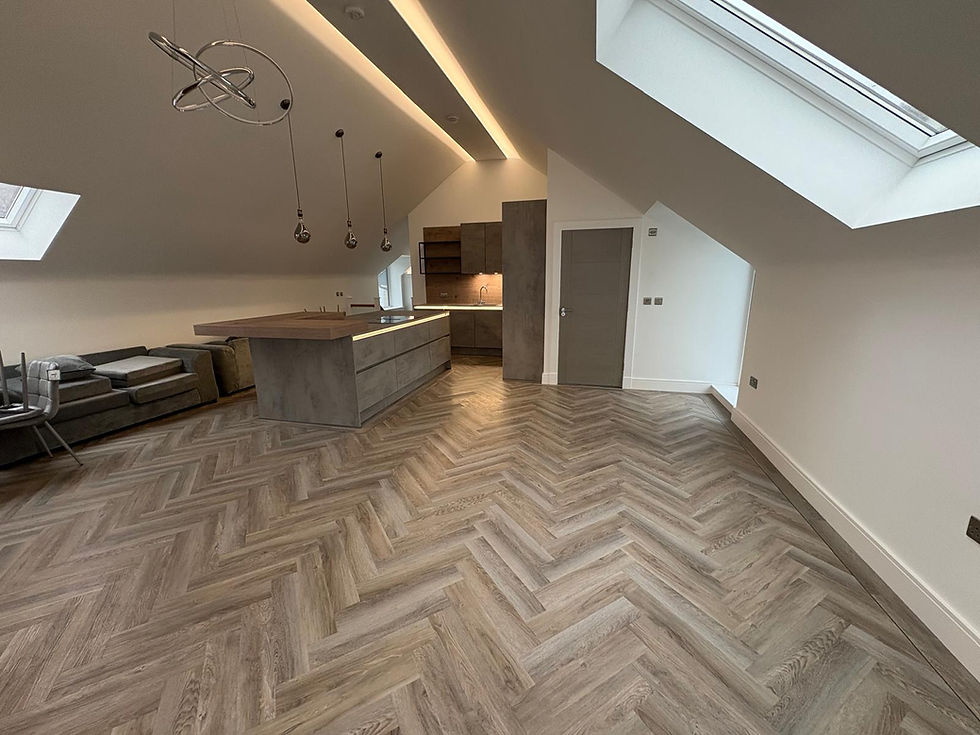
Open-plan new builds also need clear zone definition. A rug beneath the sofa area, a different light source over the dining table, and deliberate furniture placement create visual boundaries between living, dining, and kitchen areas without physical barriers. Buyers need to see how the open space functions day to day.
Edinburgh new build areas to consider: developments in Granton Waterfront, Fountainbridge, Leith, Craigmillar, and Wester Hailes each attract different buyer demographics, and the staging style should reflect this. A young professional buying in Fountainbridge responds to different styling than a family buying in Craigmillar.

Staging Colony and Main Door Flats
Edinburgh has flat types you won’t find anywhere else in Scotland, and they deserve specific staging attention.
Colony flats are Edinburgh’s distinctive terraced colonies - found in Stockbridge, Abbeyhill, Dalry, and other established neighbourhoods. They have unique charm but unusual layouts, often split across two levels with compact rooms connected by internal stairs. The staging approach here is to lean into the character rather than fight against it. Emphasise the cosy proportions, celebrate original features, and use scale-appropriate furniture that makes the rooms feel intentional rather than cramped.
Main door flats are ground-floor tenement flats with their own front door - no communal stair. These appeal strongly to families, downsizers, and anyone who values a private entrance and the possibility of garden access. When staging a main door flat, highlight the private entrance (it’s a genuine selling point), any garden or patio access, and the ease of single-level living. These are the details that differentiate a main door flat from an upper flat in the same building.
For both types, Edinburgh buyers know exactly what these flats are. Don’t try to make them something they’re not - lean into their character and focus on showing the space at its practical best.
Neighbourhood-Specific Staging Tips for Edinburgh Flats
Edinburgh’s neighbourhoods each have distinct buyer demographics, and smart staging reflects this. Here’s how to tailor your approach depending on where your flat is located.
Marchmont and Bruntsfield: Popular with young professionals and academics. Stage for a contemporary lifestyle - clean, modern accessories set against beautiful period features. Think coffee table books, a record player, and design-led details that signal a stylish, sociable life.
New Town and Stockbridge: Attracts affluent buyers who appreciate heritage and quality. Stage with understated elegance - carefully curated artwork, fresh flowers, quality fabrics. Nothing too trendy or disposable. The styling should feel timeless and assured.
Leith and Easter Road: A mix of young first-time buyers and creative professionals. Staging can be slightly more eclectic and personality-driven here - plants, interesting textures, a mix of vintage and modern pieces. Leith buyers respond to individuality.
Gorgie and Dalry: Strong first-time buyer market. Stage to show value and functionality. Highlight storage solutions, practical layouts, and easy everyday living. Keep the styling simple, accessible, and warm.
Morningside and Comiston: Family-oriented buyers and downsizers. Stage to show family-friendly living - a homework nook in the spare room, a cosy reading corner, a well-set dining table that suggests Sunday lunches and dinner parties.
Note: these are broad generalisations based on typical buyer demographics. Every flat is unique and staging should always be tailored to the specific property and its target buyer.

5 Mistakes to Avoid When Staging Your Edinburgh Flat
1. Over-furnishing. This is the single most common mistake in Edinburgh flats. The spaces are compact, and too much furniture makes them feel claustrophobic and small. As a general rule, remove at least 30–40% of your furniture before staging. If it feels sparse to you, it probably looks just right to a buyer.
2. Ignoring the communal stair. Buyers form an impression before they reach your front door. While you can’t fully stage the communal stair, you can ensure your own front door is clean and freshly painted, the nameplate is presentable, and the landing outside your flat is tidy. These small details matter.
3. Blocking natural light. Heavy curtains, tall furniture placed in front of windows, and dark wall colours all reduce the sense of space and light. Edinburgh’s natural light is precious, especially in winter. Maximise it at every opportunity.
4. Forgetting about storage. Edinburgh flat buyers are acutely aware of storage limitations. Show off your storage rather than hiding it - tidy cupboards, organised wardrobes, clear surfaces. Prove that the flat works for real life, not just for photographs.
5. Generic styling. Edinburgh has personality, and your staging should reflect it. A Marchmont tenement should feel different from a Leith new build. Styling that looks like it was lifted from a generic interiors catalogue misses the opportunity to connect with the specific buyer your flat will attract.
Ready to Present Your Edinburgh Flat at Its Best?
Staging an Edinburgh flat is about working with the space, not against it. Maximise light, declutter ruthlessly, celebrate the architectural features that make your flat special, and style for the buyer who’s going to fall in love with it.
Whether you’re in a Marchmont tenement or a Granton new build, staging a flat for sale Edinburgh is one of the smartest investments you can make before listing. The competition is fierce, the margins are tight, and the properties that present well are the ones that sell quickly and at the strongest prices.
If you’re considering staging a flat for sale Edinburgh and want to know exactly what it would involve for your specific property, book a free consultation with June Home Staging. We’ll visit your flat, assess every room, and give you a clear staging plan - whether you want to handle it yourself or have us take care of everything. Learn more about our Edinburgh home staging services or download our free staging checklist to get started today.
Frequently Asked Questions
How much does it cost to stage a flat in Edinburgh?
Staging an Edinburgh flat typically costs between £1,000 and £2,500 depending on size, condition, and whether the flat is vacant or occupied. Occupied flats usually cost less as we work with your existing furniture.
Is it worth staging a one-bedroom flat in Edinburgh?
Yes. One-bed flats face the most competition in Edinburgh’s market, so presentation matters enormously. Even a modest staging investment of £1,000 to £1,500 can help your flat stand out and attract faster, stronger offers.
How do I make my Edinburgh tenement flat look bigger for viewings?
Remove at least 30–40% of your furniture, use mirrors to bounce light, keep window treatments light and airy, and choose a pale, neutral colour palette. Floating furniture away from walls creates the illusion of more floor space.
Should I stage a flat that needs renovation?
Light staging can help buyers see past cosmetic issues and focus on the flat’s potential. However, if the flat needs significant structural or damp work, address those issues first. Staging cannot disguise fundamental problems flagged in a Home Report.
What’s the most important room to stage in an Edinburgh flat?
The living room. It’s typically the hero image in your ESPC listing and the room where buyers form their emotional connection with the property. In Edinburgh tenements, the bay-windowed living room is the defining feature.
Can I stage my Edinburgh flat myself?
You can make significant improvements with DIY staging. Our free staging checklist gives you a practical, room-by-room guide. For maximum impact, a professional consultation can identify opportunities you might miss and ensure the styling appeals to your target buyer.


Comments